39 physical vs chemical change diagram
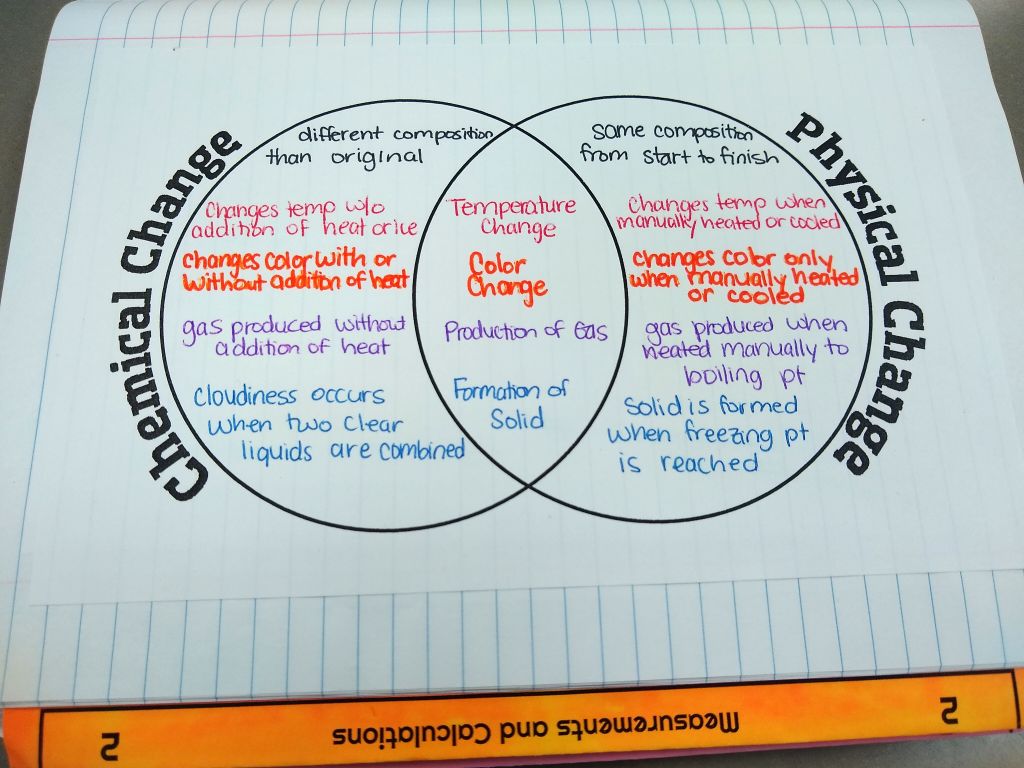
Since the chemical identity of the matter in question is unchanged, this process represents a physical change. Thus melting point is a physical property. On the other hand, flammability is a chemical property of matter because the only way to know how readily a substance ignites is to burn it. Jan 7, 2021 — I created this physical changes vs chemical changes venn diagram for my chemistry students to glue in their chemistry interactive notebooks.
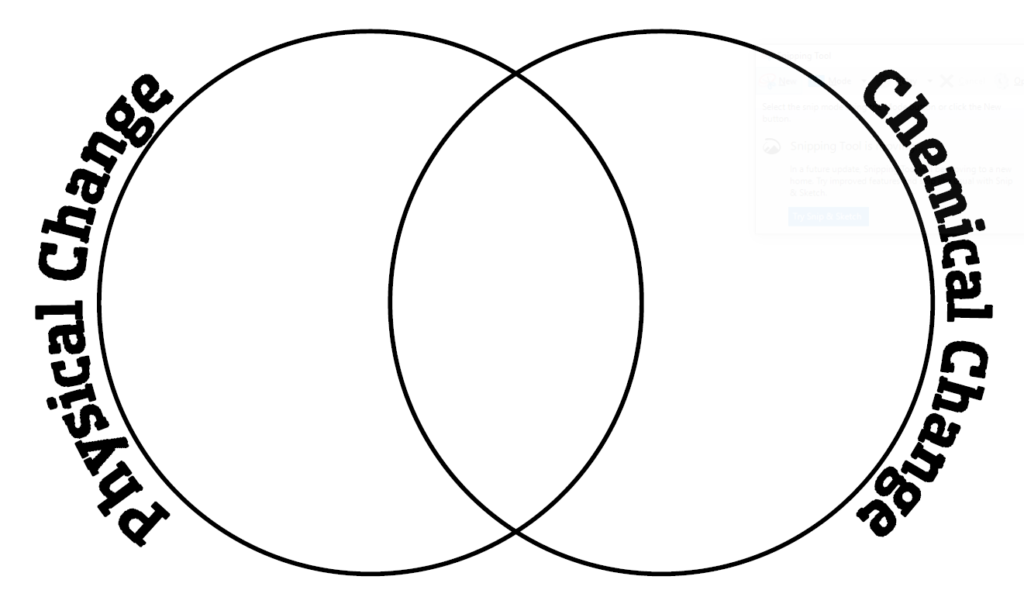
I created this physical changes vs chemical changes venn diagram for my chemistry students to glue in their chemistry interactive notebooks. • have students break into groups and complete a compare and contrast venn diagram (attached) on physical and chemical properties . Students will write (or glue in) each property into the venn diagram.

Physical vs chemical change diagram
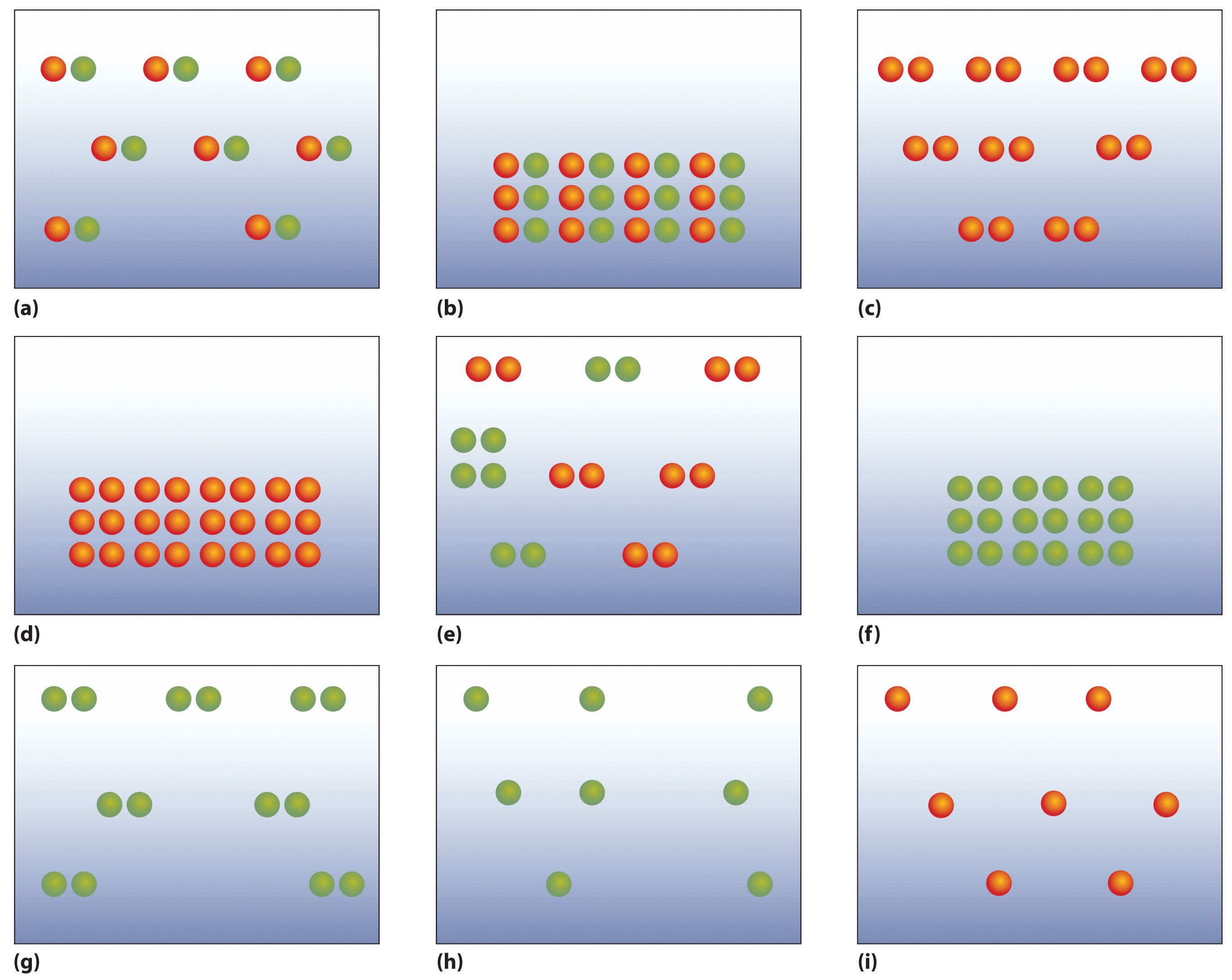
Chemical change. A chemical change occurs whenever matter changes into an entirely different substance with different chemical properties.This means that on the submicropsic level bonds are breaking and/or forming. In the following submicroscopic representations, the two different compounds in the first diagram rearrange to form two new substances in the second diagram (a diatomic element and ... A chemical change is a change in matter in which one or more new substances is produced. This process is not easy to reverse. Some clues that a chemical change has taken place are a change in color, smell, or texture, the release of gas, temperature change, and/or change of state. Chemical Change vs. Physical Change. Telling the difference between a chemical change and a physical change seems trickier than it is. The main difference between a chemical change and a physical change is what happens to a substance's composition. Here are the basic definitions of chemical and physical changes:
Physical vs chemical change diagram. Physical and chemical change refer to the two types of change in matter. Physical change refers to when there is a difference in an object's physical properties like shapes and sizes. On the other hand, a chemical change has occurred when an object's chemical composition has altered, thus, creating a new kind of substance. Indicate whether the following is a physical or chemical change.a. Over time, liquid water in an open container evaporates and becomes a vapor in the airb. Gasoline burns in air when exposed to spark or high heat.c. After cutting a piece of sodium in air, the surface of the metal changes from a highly shiny surface to a dull gray color Terms in this set (22) Physical change. dissolving sugar into water. Chemical change. Burning a log. Physical change. Ice melting. Physical change. Water evaporating. Physical and chemical changes Physical changes. Changes of state are examples of physical changes. No new substances are made, and the change is often easily reversed. ... This diagram shows what ...
Physical vs. Chemical Changes Matter is always changing. Ice in your drink melts. Wood in your fire burns. Physical Change - a change that does NOT alter the chemical properties of a substance (example: cutting paper, phase change); change in size or shape; same composition *PHYSICAL processes can be reversed PHYSICALLY Explain how aluminum could undergo a physical change. A chemical change. Construct a heating curve for a substance that is heated to 150°C. The substance is originally a solid at 35°C, melts at 75°C, and boils at 126°C. Explain how a recycling plant works Test Form B: Explain how aluminum could undergo a physical change. A chemical change. Physical Change: Chemical Change: When a substance undergoes a physical change, its composition remains the same despite its molecules being rearranged. When a substance undergoes a chemical change, its molecular composition is changed entirely. Thus, chemical changes involve the formation of new substances. Physical change is a temporary change. To better understand the difference between chemical vs. physical changes…. LET'S BREAK IT DOWN! Chemical changes make new substances. Anytime a new substance is made, a chemical change takes place. Usually two or more materials are combined and a new substance is formed. A chemical change can produce amazing explosions, like fireworks.
Nov 25, 2021 · Students Will Create A Venn Diagram Foldable Which Will Require Them To Compare And Contrast Physic Chemical Changes Venn Diagram Chemical And Physical Changes. Extensive Vs Intensive Properties Chemistry Classroom High School Chemistry Chemistry Class. Comparing And Contrasting Physical Chemical And Nuclear Change Venn Diagram Earth Cycles ... Chemical Changes. During chemical bonding, energy is released or absorbed making their surroundings hotter or cooler. Adding baking soda to vinegar causes the temperature to decrease. Body temperature increases to fight infections. In a physical change the nature of the substance, the particles of which it is composed and the numbers of particles remain unchanged. In a chemical change the properties of the new substances are different from the original, the particles are different and the number of particles can change. Start studying Chemical Change Vs Physical change. Learn vocabulary, terms, and more with flashcards, games, and other study tools.
Accuracy and Precision in Data - ppt download
Aug 21, 2020 — Introduction. Physical changes are limited to changes that result in a difference in display without changing the composition.
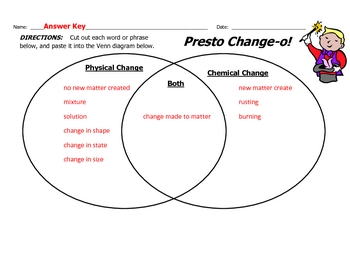
Physical and Chemical Changes--Venn Diagram
Physical and Chemical Changes Class 7 MCQs Questions with Answers. Choose the correct option. Question 1. Which of the following statement is incorrect for a chemical reaction? (a) Heat may be given out but never absorbed. (b) Sound may be produced. (c) A colour change may take place. (d) A gas may be evolved. Answer.

PHYSICAL AND CHEMICAL PROPERTIES AND CHANGES OBJECTIVE AND
Highlight the area on the phase diagram where melting/freezing occurs. Circle where boiling/condensing occurs. Place * on the graph where sublimation occurs. b. Use the diagram to determine what phase (state of matter) the substance would be at a pressure and temperature of 2 atm and 60 ° C. Liquid Pressure (atm) 2 60 Temperature (°C)
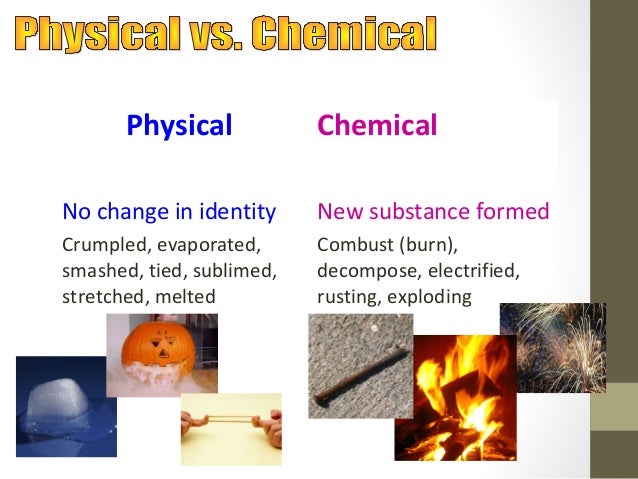
Copy Of Chemical Changes Vs. Physical Changes - Lessons ...
About this Quiz. This is an online quiz called Physical vs. Chemical Changes. There is a printable worksheet available for download here so you can take the quiz with pen and paper.

compare and contrast physical and chemical changes using venn ...
1. Changing the size and shapes of pieces of wood would be a chemical change. 2. In a physical change, the makeup of matter is changed. 3. Evaporation occurs when liquid water changes into a gas. 4. Evaporation is a physical change. 5. Burning wood is a physical change. 6. Combining hydrogen and oxygen to make water is a physical change. 7.
Introduction to Chemistry
Physical and Chemical Changes and Properties [classic] Use Creately’s easy online diagram editor to edit this diagram, collaborate with others and export results to multiple image formats. You can edit this template and create your own diagram. Creately diagrams can be exported and added to Word, PPT (powerpoint), Excel, Visio or any other ...

Chemical vs. Physical Changes Quiz
FREE Expert Solution ... Physical change → there is a change in a matter as it goes from one physical state to another. ... Chemical change → atoms rearrange ...

Physical and Chemical Changes - ppt download
Examples of chemical changes are burning, cooking, rusting, and rotting. Examples of physical changes are boiling, melting, freezing, and shredding. Many physical changes are reversible, if sufficient energy is supplied. The only way to reverse a chemical change is via another chemical reaction.

Deciding between physical and chemical changes Aseel Samaro
In a physical change, the particles are rearranged so only the appearance of the substance changes. The atomsand molecules themselves do not change and so th...

Chemical And Physical Properties And Changes - Lessons ...
The complex material based on textile/PE has superior physical and chemical properties and a high impermeability to moisture, gas and flavors. A student removes a loaf of bread hot from the oven. Vitamin A content of the pawpaw-bread significantly increased from 13.04 μg/g to 46.40 μg/100 g.
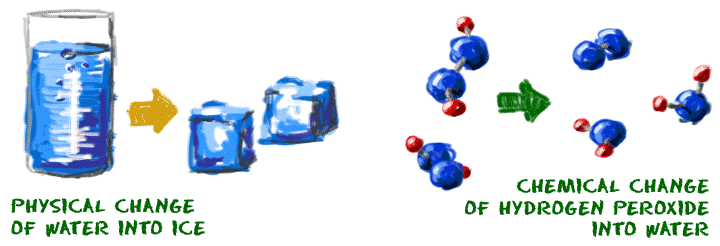
Chem4Kids.com: Matter: Chemical vs. Physical Changes
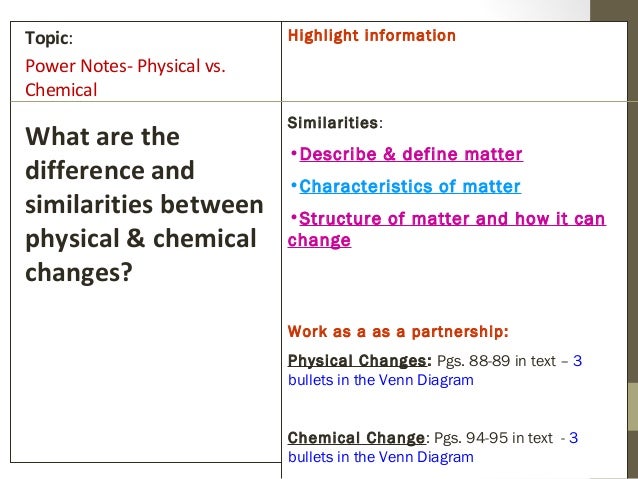
• Complete the venn diagrams. (pgs. 5-6) Thursday: • Read The Beach, the Bike, and a Chemical Change. (pgs. 7-10) • Complete the questions. (pgs. 7-10) • Cut out the different examples of physical and chemical changes. (pgs. 11-13) • Place/glue them on the Physical Change and Chemical Change organizers, based on which change they ...

Examples of Physical Changes and Chemical Changes
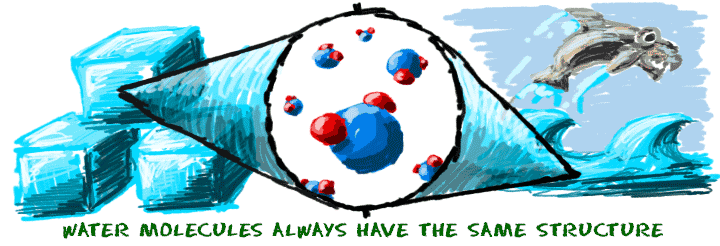
Chem4Kids.com! This tutorial introduces chemical and physical changes. Other sections include elements, the periodic table, reactions, and biochemistry.
Chem4Kids.com: Matter: Chemical vs. Physical Changes
A physical change is a change in the state or properties of matter without any accompanying change in its chemical composition (the identities of the substances contained in the matter). We observe a physical change when, for example, wax melts, sugar dissolves in coffee, and steam condenses into liquid water.

Which of the following diagrams represents... | Clutch Prep
Chemical Change: It changes the substance by making a new one. In this process it is not reversible and energy can be released or absorbed. This includes a chemical reaction to take place. Physical Change: Only Changes the appearance but not the chemical component. Dissolving, breaking and melting is included, but this change is easily reversible.

Lesson Worksheet:Comparing Chemical Reactions and Physical ...
Start studying Physical vs Chemical Changes. Learn vocabulary, terms, and more with flashcards, games, and other study tools.

Answered: 17. Based on the molecular diagram,… | bartleby
Physical Change vs. Chemical Change. Whereas a physical change is merely a change in the appearance or phase state of a substance without any alteration to its chemical composition, a chemical ...

Physical or Chemical Change Diagram | Quizlet
May change state. May become part of a mixture. Usually can be reversed. Definition: a change where a new type of matter is formed with new properties and a new chemical formula. What happens: atoms are rearranged to form new molecules with different chemical formulas. Definition: a change in matter where no new molecules are formed, the ...

Chemical vs Physical Change Venn Diagram | Chemical and ...
Chemical Change V.S. Physical Change [classic] Use Creately’s easy online diagram editor to edit this diagram, collaborate with others and export results to multiple image formats. You can edit this template and create your own diagram. Creately diagrams can be exported and added to Word, PPT (powerpoint), Excel, Visio or any other document.

Unit 7 Chemical Reactions. Physical Vs. Chemical Change ...
Physical vs. Chemical Change Quick Check Connection 8 A 1-Which observation most likely indicates that only a chemical change has taken place? 2-Which changes shown in the table are physical changes? 3-Why is it a physical change . Science. The diagram below shows the structural formula and 3D model of the same substance.

1.The Venn diagram above compares chemical changes to ...
Chemical Change vs. Physical Change. Telling the difference between a chemical change and a physical change seems trickier than it is. The main difference between a chemical change and a physical change is what happens to a substance's composition. Here are the basic definitions of chemical and physical changes:

Examples of Physical Changes
A chemical change is a change in matter in which one or more new substances is produced. This process is not easy to reverse. Some clues that a chemical change has taken place are a change in color, smell, or texture, the release of gas, temperature change, and/or change of state.

Physical and Chemical Changes | Worksheet | Education.com ...
Chemical change. A chemical change occurs whenever matter changes into an entirely different substance with different chemical properties.This means that on the submicropsic level bonds are breaking and/or forming. In the following submicroscopic representations, the two different compounds in the first diagram rearrange to form two new substances in the second diagram (a diatomic element and ...

1.4: Chemical and Physical Change - Chemistry LibreTexts

Solved Identify each transition in this flowchart as a ...

Dublin Schools - Lesson : Chemical vs. Physical Change: How ...

Which of the following diagrams represents... | Clutch Prep

venn diagram on clinical thermometer and laboratory ...

Formative Assessment: Physical and Chemical Changes B - Quizizz

Physical vs Chemical Changes Diagram with Examples by ...

Physical vs. Chemical Changes

Lesson Chemical Reactions Un-Notes | BetterLesson
Physical vs. Chemical

1.4: Chemical and Physical Change - Chemistry LibreTexts

Physical changes, Chemical properties and chemical changes ...
Physical Changes vs Chemical Changes Venn Diagram | Math = Love

Solution: Based on the molecular diagram,... | Chemistry

Physical vs. Chemical Change - Mumley Science
Physical Changes vs Chemical Changes Venn Diagram | Math = Love

Physical and Chemical Changes Lab - ppt video online download


Comments
Post a Comment